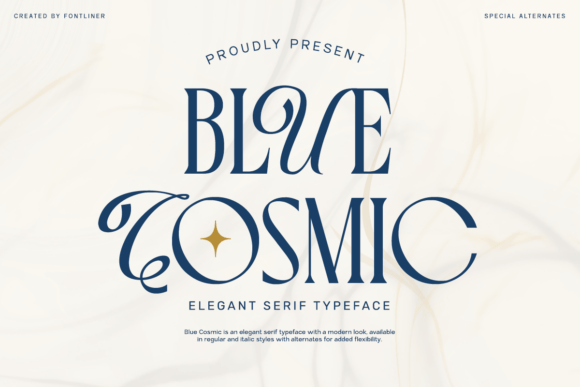
Blue Cosmic: A Practical Guide to This Elegant Serif Typeface
When selecting a typeface for a design project, the choice often hinges on the specific aesthetic and functional requirements. Blue Cosmic is a serif font that has garnered attention for its particular blend of classical elegance and contemporary flair. This article provides a balanced examination of its characteristics, ideal applications, and potential limitations to help you determine if it aligns with your project's goals.
Understanding Blue Cosmic's Design DNA
At its core, Blue Cosmic is classified as a modern serif. This means it retains the traditional, legible structure of serif typefaces—featuring small strokes at the ends of main letterforms—but infuses them with a distinct sense of refinement and artistry. The design is characterized by smooth, graceful curves and a consistent, moderate contrast between thick and thin strokes. A notable feature is the inclusion of stylish alternate characters and ligatures, which allow for greater customization and a more unique typographic voice when activated.
The overall impression is one of sophisticated clarity. It avoids the stark minimalism of a geometric sans-serif while steering clear of the potentially dated or overly ornate feel of some classic serif designs. This positions it in a versatile middle ground: formal enough for luxury contexts, yet modern enough to feel fresh and relevant.
Core Strengths and Ideal Applications
The primary benefit of Blue Cosmic lies in its ability to convey a sense of understated luxury and artistic elegance without sacrificing readability. This makes it particularly effective in specific domains.
- Brand Identity for Premium Markets: For brands in fashion, cosmetics, high-end hospitality, or artisanal goods, the typeface can help establish an identity rooted in quality and taste. Its elegance supports a narrative of exclusivity and careful craftsmanship.
- Editorial and Publication Design: In magazines, lookbooks, or book covers, Blue Cosmic excels at creating compelling headlines and subheadings. It draws the eye and sets a sophisticated tone for the content within, especially in contexts related to culture, design, and lifestyle.
- Luxury Packaging and Visuals: The font's refined presence translates well to physical media. It can elevate the perceived value of product packaging, labels, and point-of-sale materials where a tactile, elegant aesthetic is paramount.
- Stylish Digital Headlines: For websites or digital campaigns targeting a design-conscious audience, using this font for hero text or key headings can immediately establish a premium and artistic visual hierarchy.
In these scenarios, the typeface works as a strategic tool. It doesn't just display text; it contributes to the overall mood and positioning of the brand or publication.
Important Considerations and Potential Tradeoffs
No typeface is universally perfect. Evaluating Blue Cosmic requires an honest look at its potential drawbacks and the contexts where it might not be the optimal choice.
- Readability at Small Sizes: Like many display and elegant serifs, the very features that give it character—the fine details, alternate characters, and subtle curves—can become a liability at very small point sizes or low screen resolutions. For body text in long-form digital reading or in contexts requiring maximum legibility (like technical manuals), a more robust, workhorse serif or sans-serif may be superior.
- Overpowering Simple Projects: If a design's goal is to communicate pure simplicity, neutrality, or raw functionality, the artistic flair of Blue Cosmic might compete with that message. Its personality is pronounced, and using it in a minimalist, ultra-clean interface could feel incongruous.
- Contextual Appropriateness: The font's association with luxury and artistry means it could feel out of place in projects intended to convey ruggedness, overt technicality, or playful, childlike energy. Using it for a construction company's branding or a children's game would likely create a mismatch between the visual language and the intended message.
Making a Practical Decision: Is Blue Cosmic Right for You?
To determine if this typeface fits your project, consider these guiding questions:
- What is the core message? Does your project need to communicate elegance, sophistication, or artistic refinement? If yes, Blue Cosmic is a strong candidate. If the message is about accessibility, neutrality, or high-energy fun, explore other options.
- What are the primary use cases? Will the font be used predominantly for large headlines and short, impactful text, or will it need to perform reliably as body copy across various devices? Its strengths lie in the former.
- Who is the audience? Does your target audience appreciate and respond to aesthetic, design-forward typography? A design-savvy audience may recognize and appreciate the font's qualities, while a broader audience might simply perceive it as "nice" without the specific connotations.
- What is the ecosystem? Consider the other visual elements. Will Blue Cosmic harmonize with your chosen color palette, imagery, and layout style? A font never exists in isolation.
If your analysis aligns with the font's strengths—premium branding, editorial headlines, luxury visuals—then it is worth acquiring a license and testing it thoroughly in mockups. Pay close attention to how its alternates function and whether its overall tone matches your vision.
Exploring Alternatives
If Blue Cosmic doesn't quite fit, the type landscape offers numerous alternatives:
- For more traditional elegance: Consider classic serif families like Garamond or Baskerville. They offer timeless grace with a long history of use in print.
- For a modern, high-contrast look: Fonts like Didot or Bodoni provide dramatic thick-thin transitions, offering a different kind of high-fashion elegance that can be more stark and graphic.
- For enhanced readability in text: Look into serif families designed for extensive reading, such as Merriweather or Source Serif Pro, which prioritize screen legibility and comfort.
- For a cleaner, more neutral aesthetic: A versatile sans-serif like Helvetica Neue, Inter, or Proxima Nova might better serve projects where the content itself should take absolute precedence over typographic style.
The decision ultimately rests on a clear understanding of your project's objectives, audience, and context. Blue Cosmic