North: Mastering the Art of Elegant All-Caps Calligraphy
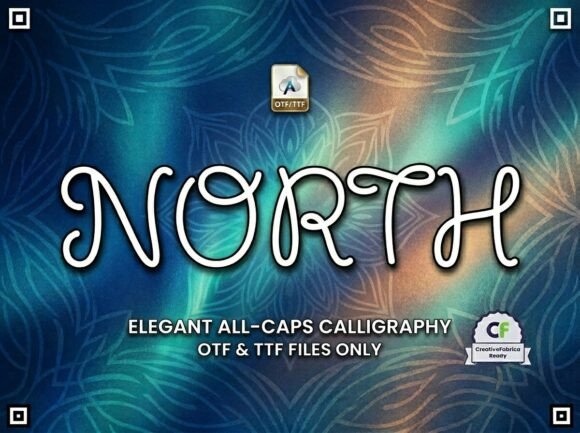
In the crowded landscape of digital typography, finding a font that balances artistry with functionality is a rare discovery. North is an elegant all-caps calligraphy typeface designed to bridge that gap, offering designers and creators a tool that feels both timeless and modern. Characterized by its smooth, monolinear strokes and rhythmic, looping terminals, North captures the effortless beauty of a master artist’s hand. However, working with an all-caps calligraphy font requires a specific understanding of design principles. Many users purchase typefaces like North with high hopes, only to find their layouts looking disjointed or unprofessional because they applied the font without considering its inherent nature. To truly unlock the potential of this sophisticated typeface, one must move beyond simply installing the file and start treating it as a strategic element of visual communication.
The "Shouting" Problem: Understanding All-Caps Dynamics
One of the most frequent errors made by beginners and even seasoned professionals is treating an all-caps font like standard sentence-case typography. Because North consists entirely of uppercase letters, using it for long-form paragraphs creates a visual barrier known as "typographic shouting." When readers encounter a wall of capital letters, the lack of ascenders and descenders—those tall letters like 'h' and 'd' and dropping letters like 'p' and 'y' that help the eye distinguish words—makes the text incredibly difficult to scan.
The mistake here is assuming that "elegant" means "suitable for everything." If you use North to write a full bio or a lengthy product description, you will likely frustrate your audience. The result is not a sophisticated brand image, but rather a presentation that feels aggressive or, worse, unreadable. To avoid this, reserve North for high-impact moments. It is designed for headers, logos, and short, punchy phrases. Think of it as the punctuation mark of your design, not the sentence itself. A better approach is to pair North with a clean, highly legible serif or sans-serif font for the body text, allowing the calligraphy style to act as a visual accent rather than the workhorse of the layout.
Kerning and Spacing: The Devil in the Details
Another overlooked aspect of using high-end typefaces like North is the assumption that the spacing is "plug-and-play." While professional font designers spend hours perfecting kerning (the space between specific pairs of letters), calligraphy fonts with looping terminals can present unique challenges. For instance, the connection between a 'T' and an 'h' or an 'N' and an 'o' might look visually uneven depending on the software you are using.
A common misunderstanding is that the font is "broken" if letters overlap or look too far apart. In reality, this is often a failure to utilize OpenType features or manual kerning adjustments. If you simply drag North onto a canvas and type without tweaking, you might end up with awkward gaps that disrupt the "rhythmic" flow the designer intended. This affects the perceived quality of your work; a luxury brand header with poor spacing looks amateurish, instantly cheapening the product it represents.
Before finalizing a design, zoom in on your letterforms. If your software allows, explore the Glyphs panel to see if North offers alternate characters. Many premium calligraphy fonts include stylistic alternates that change the shape of specific letters to create better flow. If the standard 'R' doesn't fit well with the 'A' before it, an alternate version might solve the problem instantly. Always manually inspect the spacing in your headers to ensure the "effortless beauty" remains intact.
Context is King: Matching North to the Medium
North is described as having "airy visual weight" and "balanced proportions," making it ideal for luxury boutique branding and bespoke wedding stationery. However, a frequent mistake is applying this style to contexts that fight against its nature. For example, using a delicate, monolinear script on a busy, high-contrast background or a small digital screen can render the text illegible.
Consider the medium of your communication. On a textured paper stock for a wedding invite, North will likely look stunning. However, if you are designing a mobile app interface or a presentation slide viewed from the back of a room, the intricate details of the looping terminals may blur together. This is where practical evaluation comes in. Always test your typography at the actual size it will be viewed. If the letters merge into a blob, you have chosen the wrong context.
A better choice for digital screens or low-resolution environments might be a bolder, simplified sans-serif, saving North for the hero image or the physical, printed collateral where its nuances can be appreciated. This ensures you are delivering a "polished prestige" rather than a confusing visual noise.
Pairing Pitfalls: Avoiding Visual Chaos
When you invest in a typeface with a strong personality like North, the instinct is often to pair it with another decorative font to match its "sophisticated" vibe. This is a trap. Combining two highly stylized fonts creates visual competition, resulting in a chaotic and amateurish design. The elegance of North relies on contrast; it needs a quiet partner to stand out.
If you pair North with a heavy slab serif or a playful handwritten script, the message becomes muddled. The viewer doesn't know where to look, and the sense of "timeless impact" is lost. Instead, follow the principle of opposites attract. Because North features flowing, artistic strokes, pair it with a geometric sans-serif (like Montserrat or Lato) or a classic, sturdy serif (like Garamond or Baskerville). This creates a hierarchy that guides the eye naturally, ensuring your branding feels intentional and curated rather than chaotic.
Evaluating Authenticity and Licensing
Finally, as you explore options to buy or download North, be vigilant about the source. In the digital marketplace, it is easy to stumble upon "free" versions of premium fonts. Using unauthorized versions is not only an ethical misstep but a practical risk. Pirated fonts often lack essential OpenType features, have corrupted kerning tables, or come with malware. Furthermore, for commercial projects—especially those involving logos or merchandise—using an unlicensed font can lead to severe legal and financial consequences down the line.
Before purchasing, verify the licensing terms. Does the license cover the specific number of users or devices you need? Does it allow for web embedding (WOFF/WOFF2 files)? Ensure you are buying from the original designer or a reputable foundry. This guarantees that you receive the high-quality file structure required for professional work and supports the artists who create the tools that elevate our designs.
By understanding the mechanics of all-caps typography, respecting the spacing requirements, and pairing North with complementary, understated fonts, you can transform a simple layout into a piece of art. It is not just about the font; it is about how you wield it. Used correctly, North becomes more than just a typeface—it becomes the signature of your brand's identity.