Retro Ranch: Mastering the Bold Vintage Font for Authentic Western Design
The allure of the American West, with its rugged individualism and timeless aesthetic, has a powerful pull in modern design. Capturing that spirit requires more than just a cowboy hat or a horseshoe; it demands typography with genuine character. This is where Retro Ranch, an audacious vintage display font, enters the scene. It’s not merely a collection of letters; it’s a statement piece that carries the rustic charm of the classic west in every rough-hewn serif and daring letterform. For designers, entrepreneurs, and creators, it offers a direct path to authenticity, but wielding such a powerful tool requires a thoughtful approach.
Understanding the Soul of Retro Ranch
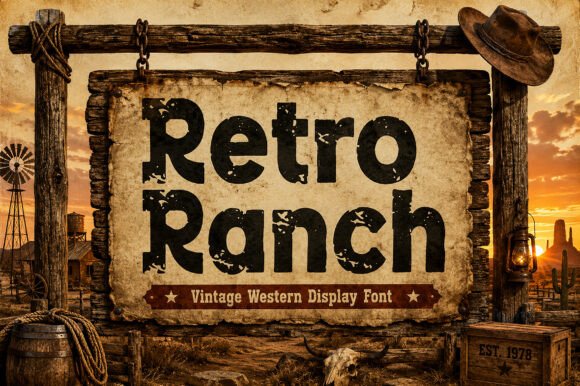
At its core, Retro Ranch is a display typeface designed for impact, not for body copy. Its robust serif contours and intentionally textured finish evoke a sense of handcrafted quality and provincial life. Think of the weathered wood of an old barn, the stamped leather of a vintage saddle, or the bold lettering on a classic roadside sign. This font effortlessly channels Americana, making it a go-to for projects that need to communicate heritage, craftsmanship, and a touch of rebellious spirit.
Its versatility is surprising. While it excels at creating western logos and retro-style posters, its applications extend into contemporary farmhouse branding, restaurant aesthetics, clothing designs, packaging, and merchandise. The font’s traditional aesthetics, fused with a creative twist, allow it to enliven both print and digital spaces, crafting distinctive headlines, rustic badges, and country music graphics that truly resonate with an audience.
Avoiding Common Pitfalls with a Statement Font
The very qualities that make Retro Ranch so compelling—its bold texture and strong personality—also present the most common stumbling blocks for users. Missteps can lead to designs that feel cluttered, illegible, or tonally mismatched, ultimately undermining the project's goals.
Mistake 1: Prioritizing Style Over Legibility
The most frequent error is choosing Retro Ranch for a design where clarity is paramount, such as small body text, detailed product information, or lengthy website headers. Its intricate texture and bold strokes can become a visual blur at small sizes or when set against complex backgrounds. This directly affects usability and communication, causing frustration for the viewer and diluting your message.
Better Approach: Use Retro Ranch strategically for high-impact, short-form elements. Pair it with a clean, neutral sans-serif or a simple serif font for supporting text. For a restaurant menu, for instance, Retro Ranch can headline the dish names, while a font like Open Sans handles the descriptions and prices. This maintains the rustic aesthetic without sacrificing readability.
Mistake 2: Ignoring the Contextual Mismatch
Not every project calls for a western vibe. Forcing Retro Ranch into a minimalist tech startup logo or a formal corporate report will create a jarring disconnect. This oversight affects the presentation and perceived professionalism of the work, potentially confusing your target audience.
Better Approach: Before selecting any font, define your project's core message and audience. Ask: Does "heritage," "craftsmanship," "adventure," or "rustic charm" align with this brand? If the answer is a definitive yes, then Retro Ranch is a strong candidate. For a craft brewery's bottle label or a boutique's shopping bags, it’s perfect. For a law firm's letterhead, it’s the wrong tool.
Mistake 3: Overusing the Font and Creating Visual Noise
Because Retro Ranch is so detailed, using it for every piece of text in a layout can overwhelm the viewer. Walls of textured, ornate type become exhausting to look at and lose their special impact. This diminishes the quality of the design and can make a brand feel heavy-handed.
Better Approach: Employ the principle of typographic hierarchy. Let Retro Ranch be the star of the show for one or two key elements—a headline, a logo, a single pull quote. Use your secondary, plainer font for the supporting cast. This creates a visual rhythm and ensures the vintage font's unique character is appreciated, not drowned out.
Practical Steps for Selection and Application
Integrating a specialized font like Retro Ranch into your toolkit involves more than just a download. A mindful process ensures you get the most value and avoid future headaches.
Before You Commit: A Quick Checklist
- Test at Scale: Always test the font in the actual environment. How does the headline look on a mock-up of a T-shirt versus a business card? Does the texture hold up on a low-resolution screen?
- Check the Character Set: Ensure the font includes all the glyphs, numbers, and punctuation you need for your language. Some decorative fonts have limited character support.
- Understand the License: Verify the licensing terms. Can you use it for client work, merchandise for sale, or unlimited digital projects? Understanding this avoids legal and cost issues down the line.
- Explore the Alternates: High-quality display fonts like Retro Ranch often include stylistic alternates or ligatures. These can provide creative flexibility to customize a logo or headline further.
Application in Action: Realistic Examples
Imagine you're designing a logo for a "Rustic Roots Coffee Co." Using Retro Ranch for the main wordmark instantly communicates a focus on artisanal, traditional roasting. You might use a simpler serif for "& Co." to balance it. For their packaging, the font could headline the blend name, while a clean font lists the origin and tasting notes.
Conversely, consider a digital ad for a new SUV. While the vehicle may be rugged, using Retro Ranch could make the ad feel dated unless the campaign is explicitly tapping into a vintage Americana theme. A modern, sturdy sans-serif would likely communicate strength and innovation more effectively.
Embracing Authenticity with Confidence
Retro Ranch is more than a font; it's a gateway to a rich visual language. Its power lies in its ability to instantly evoke a specific, beloved aesthetic. By understanding its intended use, respecting its bold nature, and applying it with thoughtful restraint, you can harness its full potential. You’ll move beyond simply using a vintage typeface to crafting designs that feel genuinely authentic, memorable, and perfectly suited to the story you want to tell. The key is to let its character enhance your message, not overshadow it, ensuring your final product is both striking and effective.