The Power of the Personal Touch: Why Simple Fine Script is Redefining Modern Branding
In an era dominated by the crisp, geometric lines of sans-serif typography and the rigid structure of digital interfaces, a significant shift is occurring in the visual landscape. Brands, creators, and designers are increasingly seeking warmth, authenticity, and human connection in their visual assets. This movement has paved the way for a resurgence of handwritten typography, but not the chaotic, messy scripts of the past. Instead, the market demands refined, legible, and elegant personalization. Enter Simple Fine, a smooth handwritten script font that bridges the gap between the casual intimacy of a signature and the professional requirements of modern design.
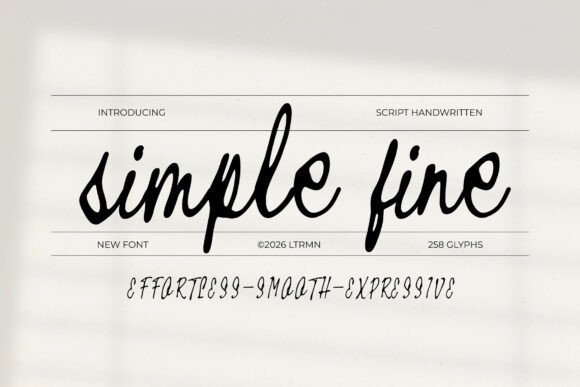
Simple Fine is not merely a collection of letters; it is a typeface designed with effortless movement and expressive curves. It captures the essence of a natural signature style while maintaining the cleanliness required for commercial viability. For professionals, entrepreneurs, and marketers, understanding the role of such typography is crucial for staying relevant in a marketplace that values "human-first" design.
The Rise of Authenticity in Visual Communication
To understand the value of Simple Fine, one must first look at the broader consumer trends influencing design today. We are witnessing the "Authenticity Economy." Consumers are fatigued by the hyper-polished, sterile aesthetics that have dominated the last decade of tech branding. There is a growing preference for brands that feel approachable, artisanal, and real.
This shift is evident across various sectors. In the luxury market, the "undone" look is taking precedence over rigid opulence. In the wellness and lifestyle sectors, the "homemade" aesthetic is king. Typography plays a massive role in this psychological shift. A rigid block font signals corporate efficiency, but a smooth, flowing script like Simple Fine signals care, attention to detail, and a personal relationship with the customer.
Furthermore, the explosion of the creator economy and the rise of the freelance workforce have necessitated a new kind of branding. Solopreneurs and freelancers are their own brands. They require typography that feels like an extension of their own handwriting—something that asserts ownership and presence without being illegible. Simple Fine serves this demographic perfectly, offering a polished version of one’s own signature that can be scaled from a business card to a billboard.
Design Anatomy: The Technical Edge of Simple Fine
While the emotional appeal of a script font is important, professional designers know that usability is paramount. Many handwritten fonts fail in the execution; they are either too messy to read at small sizes or too rigid to feel truly organic. Simple Fine navigates this challenge through specific design choices that cater to modern workflows.
The typeface features elegant, flowing strokes that mimic the natural pressure and speed of a hand holding a fine-tipped pen. This is not a heavy, brush-style calligraphy; it is delicate and precise. This distinction is vital for the current trend of minimalism. As design layouts become more spacious and airy, heavy typography can feel intrusive. The lightweight nature of Simple Fine allows it to occupy space without overwhelming the composition.
Advanced Typographic Features
For the discerning designer, the technical specifications of a font are just as important as its style. Simple Fine is equipped with advanced OpenType features that elevate it from a standard font to a dynamic design tool:
- Ligatures and Alternates: One of the tell-tale signs of a cheap digital font is repetition—seeing the same letter 'o' or 't' identical every time. Simple Fine includes ligatures and alternative punctuation. This allows designers to customize the flow of text, ensuring that connections between letters look natural and avoiding the "digital" feel.
- Multilingual Support: In a globalized market, a font that only supports English is limiting. Simple Fine includes multilingual characters, making it a viable option for international campaigns and diverse audiences.
- Comprehensive File Formats: The inclusion of OTF, TTF, WOFF, and WOFF2 files ensures that Simple Fine is ready for any environment. Whether the designer is working in Adobe Illustrator for print media or coding a responsive website, the font is optimized for performance. The WOFF2 format, in particular, offers superior compression, addressing the modern need for fast-loading web pages without sacrificing style.
Practical Applications: Where Simple Fine Shines
The versatility of Simple Fine makes it a strategic asset across various creative and business domains. It is not limited to a single use case but rather adapts to the context in which it is placed.
1. Modern Branding and Logos
For startups in the fashion, beauty, or lifestyle sectors, a logo must convey identity instantly. Simple Fine offers a "signature" look that implies exclusivity and craftsmanship. When paired with a clean sans-serif for body text, it creates a high-contrast hierarchy that guides the viewer's eye. It suggests that the brand is run by a real person, not just a corporation, which fosters immediate trust.
2. Wedding and Event Stationery
The invitation industry has long relied on calligraphy, but traditional scripts can often feel dated or overly formal. Modern couples are looking for invitations that reflect a relaxed yet elegant celebration. Simple Fine provides the perfect balance, offering the romance of a handwritten note with the legibility required for event details.
3. Social Media Visuals
Social media platforms like Instagram and Pinterest are visually saturated. To stand out, content needs to feel curated and personal. Simple Fine is ideal for creating quote graphics, headers, and watermarks. Its flowing nature adds movement to static images, making posts more engaging. It fits perfectly within the "soft life" and "aesthetic" trends prevalent in digital communities.
4. Packaging Design
As e-commerce continues to grow, the "unboxing experience" has become a critical touchpoint for customer retention. Brands are using typography to make packaging feel like a gift. Using Simple Fine on labels, boxes, or thank-you cards adds a tactile, human element to the product, reinforcing the idea that care was taken in the preparation of the order.
Adapting to Changing Workflows and Expectations
The modern design workflow is agile. Projects move from concept to execution faster than ever before. Designers and creators need tools that are intuitive and versatile. Simple Fine fits this need by being a "plug-and-play" solution that requires minimal manipulation to look good.
Moreover, user expectations regarding accessibility have changed. While script fonts are inherently harder to read than block fonts, the "fine" nature of this typeface ensures it remains legible when used for headlines or short bursts of text. It respects the user's reading experience while maintaining stylistic integrity. This balance is crucial for marketers who need to convey a message quickly and beautifully without causing cognitive friction for the reader.
The Future of Typography: Human-Centric Design
Looking forward, the trajectory of design suggests a continued move toward human-centric aesthetics. As artificial intelligence generates more of our visual content, the value of things that look and feel "human-made" will increase. Typography is one of the few areas where a designer can inject a distinct personality into a project.
Simple Fine represents a forward-thinking approach to typography. It acknowledges that while we live in a digital world, our emotional responses are still analog. We respond to warmth, flow, and the subtle imperfections that suggest a human hand. However, it packages these qualities in a technically robust format—complete with web fonts and multilingual support—ensuring it remains a practical tool for the professional world.
For the entrepreneur building a brand identity, the freelancer pitching a client, or the designer curating a mood board, Simple Fine is more than just a font. It is a statement of intent. It declares that the work is personal, the quality is high, and the style is timeless. In a crowded market, that personal touch is often the differentiator that turns a viewer into a customer.
By integrating Simple Fine into your design toolkit, you are not just adopting a new typeface; you are aligning with a broader cultural movement that values connection, elegance, and the enduring power of the written word.