Understanding Dreamy Garden: A Modern Handwritten Font for Creative Projects
In the vast landscape of digital typography, the search for a font that feels both personal and professional is a common challenge. Among the myriad options available, Dreamy Garden, introduced by Timurtype Studio, presents itself as a modern handwritten font designed to bridge this gap. It aims to deliver an organic, flowing aesthetic without sacrificing the clarity needed for contemporary design work. For designers, brand strategists, and content creators evaluating their typographic resources, understanding the specific characteristics, ideal applications, and inherent tradeoffs of a font like Dreamy Garden is essential for making an informed choice.
Defining the Aesthetic: What Sets Dreamy Garden Apart
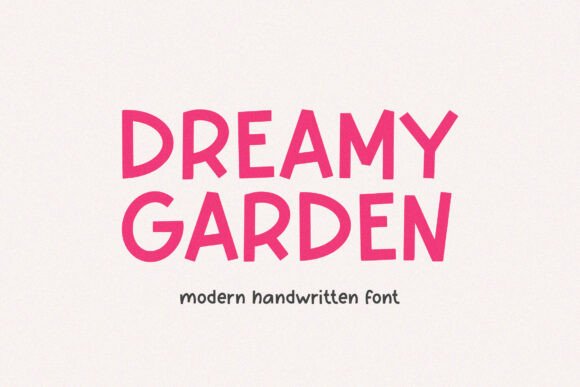
Dreamy Garden is categorized as a modern handwritten font, a style that has evolved significantly from traditional calligraphy or casual script. Its distinctiveness lies in its blend of elegant curves with a natural, flowing style. Unlike rigid geometric fonts, it mimics the subtle imperfections and fluid motion of handwriting, but with a refined polish. The letterforms are crafted to create a soft, stylish look, avoiding the overly casual or chaotic appearance that can sometimes plague script fonts. This balance is crucial for applications where legibility cannot be compromised for style.
The font's design philosophy centers on creating a "charming touch" through a smooth handwritten aesthetic. This is achieved through consistent stroke weights, thoughtful connections between letters, and a rhythm that guides the eye naturally across a line of text. When compared to other handwritten styles, Dreamy Garden positions itself as more elegant and composed than playful or rustic scripts, yet more approachable and human than formal calligraphic fonts. It occupies a specific niche: sophisticated informality.
Practical Applications and Ideal Use Cases
The utility of any font is defined by its context. Dreamy Garden is explicitly designed for creative projects where a personal, stylish touch is desired. Its strengths are most evident in specific scenarios:
- Branding and Logo Design: For brands aiming to convey warmth, creativity, and authenticity—such as boutique bakeries, artisan craft shops, lifestyle blogs, or wellness coaches—Dreamy Garden can serve as a primary logotype or a complementary accent font. It helps build an immediate emotional connection with the audience.
- Invitations and Stationery: The font excels in wedding invitations, event announcements, and greeting cards. Its flowing nature evokes elegance and personal care, making it ideal for any communication that benefits from a heartfelt, handcrafted feel.
- Social Media and Digital Content: On platforms like Instagram or Pinterest, where visual appeal is paramount, Dreamy Garden can be used for quote graphics, story overlays, or promotional banners. It helps content stand out with a curated, artistic vibe that generic sans-serifs cannot provide.
- Editorial and Packaging: It can add visual interest to magazine pull quotes, book chapter titles, or product packaging for gourmet foods, cosmetics, or handmade goods, where shelf appeal and a sense of artisanal quality are important.
In these contexts, the font acts as a design element that communicates a specific brand personality. It is not, however, a universal solution. Its use in body copy for long-form articles, technical manuals, or legal documents would be inadvisable due to readability concerns at small sizes and in dense text blocks.
Evaluating Tradeoffs and Limitations
Every design choice involves tradeoffs, and selecting a font like Dreamy Garden is no exception. A clear-eyed evaluation requires considering its limitations alongside its benefits.
Legibility vs. Style: The primary tradeoff is between aesthetic flair and functional readability. While Dreamy Garden is designed for clarity within its style, it will never be as legible as a clean sans-serif like Arial or a classic serif like Times New Roman, especially in small print or on low-resolution screens. It demands careful pairing with a highly readable font for any supporting text.
Contextual Appropriateness: The "charming" and "soft" qualities that make it perfect for a wedding invitation could undermine the perceived seriousness of a corporate financial report or a medical brochure. Its effectiveness is highly dependent on the project's tone and audience expectations.
Technical Considerations: The availability of Dreamy Garden in multiple formats (OTF, TTF, WOFF) is a significant strength, ensuring compatibility across desktop design software (like Adobe Suite) and web platforms. Its support for multilingual characters further broadens its appeal for international projects, a practical feature that not all handwritten fonts offer.
Comparing Categories and Alternatives
When researching fonts, professionals often compare across categories. It's helpful to position Dreamy Garden within the broader typographic ecosystem.
Against Traditional Scripts: Compared to formal calligraphic scripts, Dreamy Garden is less ornate and more versatile for modern digital applications. It feels more designed and less like a historical artifact.
Against Casual Handwriting Fonts: Fonts that mimic messy notebook scribbles or childlike writing are often too informal for professional branding. Dreamy Garden offers a more controlled and polished alternative, suitable for commercial use.
Against Sans-Serifs and Serifs: This is not a direct competition but a complementary relationship. A common design strategy is to pair a expressive font like Dreamy Garden with a neutral, highly readable font for body text. For example, Dreamy Garden could be used for a headline, while a font like Lato or Roboto handles the paragraph content, creating visual hierarchy and balance.
The choice isn't about which category is "better," but which is the right tool for the job. Dreamy Garden is a specialist tool for adding personality, not a general-purpose workhorse.
Making an Informed Decision: When to Choose Dreamy Garden
Deciding to use Dreamy Garden should be a deliberate choice based on specific project needs. It may be the right choice if:
- Your Brand Voice is Warm and Creative: If your brand identity emphasizes approachability, artistry, and a personal touch, this font aligns well with that message.
- The Application is Short-Form and Visual: It works best for headlines, logos, short phrases, and display text where its stylistic details can be appreciated without taxing the reader.
- You Need a Reliable, Multi-Format Font: The inclusion of OTF, TTF, and WOFF files, plus multilingual support, makes it a practical and professional asset for a variety of design workflows.
Conversely, you may need to look for another option if:
- Maximum Legibility is Non-Negotiable: For user interfaces, long-form reading, or accessibility-focused design, a simpler, more geometric font is superior.
- The Project Demands a Formal or Corporate Tone: In contexts where tradition, authority, and neutrality are key, a handwritten style may appear out of place or unprofessional.
- You Require Extensive Weights and Styles: Dreamy Garden, as presented, is likely a single style or a limited set. Projects needing a full family with bold, italic, and condensed variants would require a different typeface.
Ultimately, fonts like Dreamy Garden are powerful tools for visual storytelling. They allow designers to inject a specific mood and character into their work. By understanding its distinct aesthetic, recognizing its ideal applications, and honestly assessing its limitations, you can determine whether it is the right resource to enhance your next creative project. The key is to match the font's personality with the project's purpose, ensuring that style serves communication rather than hinders it.