Cultivate a Garden of Creativity with the Fleas Font
In a digital landscape saturated with sterile sans-serifs and predictable geometric shapes, finding a typeface that feels truly alive can be a challenge. Most fonts are designed for neutrality, meant to disappear so the message can take center stage. However, there are moments in design when the medium is the message—when the typography needs to convey a specific atmosphere, texture, or emotion before the reader even processes the words. This is where Fleas enters the conversation, not merely as a tool for legibility, but as a distinct visual language.
Beyond Traditional Typography
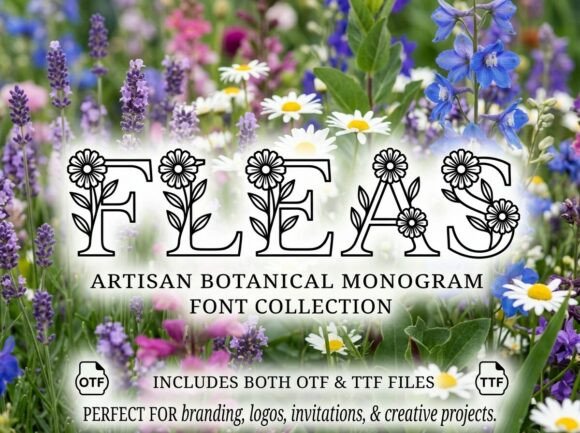
Fleas is best described as an exquisite display serif, but that clinical definition hardly does it justice. It is an artistic exploration of the intersection between nature and structure. What makes this font immediately striking is its classic, high-contrast letterforms. At its core, the structure relies on the time-tested rules of serif typography—thick strokes contrasting with thin hairlines, elegant curves, and balanced negative space. This ensures that, despite its decorative elements, the font maintains a sophisticated silhouette.
The true character of Fleas, however, lies in its details. The designers have integrated rhythmic, hand-drawn daisies and delicate leaf stems directly into the anatomy of the characters. These are not merely pasted-on graphics; they are structural components. A leaf stem might serve as the spine of a letter 'S', or a daisy might bloom where a counter (the enclosed space in a letter like 'o' or 'p') usually sits. This integration creates a visual rhythm that feels organic rather than chaotic, mimicking the way wildflowers might grow through the cracks of an old stone path.
The Aesthetic: Where Botanical Illustration Meets Digital Design
Understanding the specific aesthetic of Fleas is crucial for effective application. The font bridges the gap between traditional botanical illustration and modern cottagecore branding. It evokes a sense of nostalgia, reminiscent of Victorian-era herbariums and hand-tinted engravings, yet it remains crisp enough for high-resolution digital screens.
This duality makes it a premier choice for the "verdant-and-vintage" look. It speaks to a desire for the handmade and the natural in an increasingly artificial world. However, because of its high level of detail, Fleas is decidedly a display font. It is meant to be seen in large formats where its intricate botanical elements can be appreciated. Using it for body text would likely result in a cluttered appearance, but for headlines, logos, and hero text, it is unparalleled.
Practical Applications for Creators and Entrepreneurs
For designers, marketers, and small business owners, choosing a font is a strategic decision. Fleas offers specific benefits for industries that rely on conveying authenticity, purity, and artisanal quality.
Artisanal Packaging and Branding
Consider the market for independent artisanal soap packaging. Consumers in this space look for products that feel homemade, organic, and luxurious. A standard font might make the product look mass-produced. Fleas, on the other hand, immediately communicates "crafted by hand." The floral elements suggest natural ingredients and gentle care. When applied to a label, perhaps in a deep forest green or charcoal ink on textured kraft paper, the font becomes part of the product's sensory experience. It promises that the soap inside smells of the garden, not a laboratory.
Boutique Identities and Stationery
For a boutique wildflower shop, branding is everything. The identity needs to be as vibrant and fresh as the bouquets sold inside. Fleas provides a ready-made visual identity that is cohesive and charming. It works beautifully for the shop signage, creating a welcoming, whimsical atmosphere before a customer walks through the door.
Similarly, for personalized garden stationery, the font acts as a design element in itself. If you are a calligrapher or a stationer offering custom correspondence, using Fleas for monograms or envelope addressing adds a layer of high-end sophistication. It turns a simple sheet of paper into a keepsake, perfect for garden party invitations or thank-you notes to botanical garden patrons.
Digital Applications: Standing Out on Screen
While print is a natural home for Fleas, its impact on digital platforms is significant, particularly for those looking to create high-impact social media headers.
Social Media Strategy
On platforms like Instagram or Pinterest, where visual competition is fierce, a header image needs to stop the scroll. A generic serif font often fades into the background. Fleas, however, commands attention. Because it is "verdant-and-vintage," it fits perfectly into the aesthetic of lifestyle influencers, gardening bloggers, and eco-conscious brands.
A practical approach for a social media manager might be to use Fleas exclusively for the brand name or a specific campaign slogan, such as "Spring Collection" or "Harvest Festival." Pairing the intricate Fleas headline with a clean, geometric sans-serif for the body copy ensures readability while maintaining the brand's organic voice. This contrast highlights the beauty of the serif without overwhelming the viewer.
Creative Adaptation: Styles and Variations
One of the strengths of a display font like Fleas is its versatility in style application through color and texture.
- The Monochromatic Look: Using Fleas in a single color, such as dark olive green on a cream background, creates a sophisticated, engraved look. This is ideal for high-end product packaging or formal garden event invitations.
- The Vibrant Garden: For a more playful application, designers can use the font in a multi-color setup. By converting the text to outlines in vector software, one can fill the "daisies" with yellow and the "stems" with green, while keeping the main serif structure in brown or black. This works well for children’s garden education materials or summer festival posters.
- Texture Overlay: Applying a "roughen" effect or a paper texture overlay to Fleas can enhance its hand-drawn quality. This makes the digital text look as though it were screen-printed, adding a tactile quality that appeals to the artisanal market.
Best Practices for Using Fleas
To ensure that designs using Fleas remain clear, effective, and organized, it is important to follow a few practical guidelines. Because the font is highly decorative, it requires space to breathe.
- Prioritize Hierarchy: Use Fleas strictly for H1 headers, logos, or pull quotes. Do not attempt to use it for paragraphs or small navigation links. The botanical details will blur and become noise at small sizes.
- Manage White Space: Because the letterforms include organic shapes (leaves and flowers), the font has a complex outline. Ensure there is ample padding around the text. Crowding Fleas against other design elements will diminish its elegance.
- Pair with Simplicity: The best companion fonts for Fleas are clean and neutral. A simple sans-serif or a monospaced font can provide a modern counterpoint to the vintage botanical feel, ensuring the design doesn't look like a costume or a parody of the past.
Conclusion: A Tool for Authentic Connection
Ultimately, Fleas is more than just a collection of glyphs; it is a tool for storytelling. For the entrepreneur, it offers a way to visually articulate the values of growth, nature, and care. For the designer, it provides a distinct asset that solves the problem of how to make text feel organic. By cultivating a garden of creativity with Fleas, creators can build brands and projects that feel rooted, authentic, and undeniably beautiful.