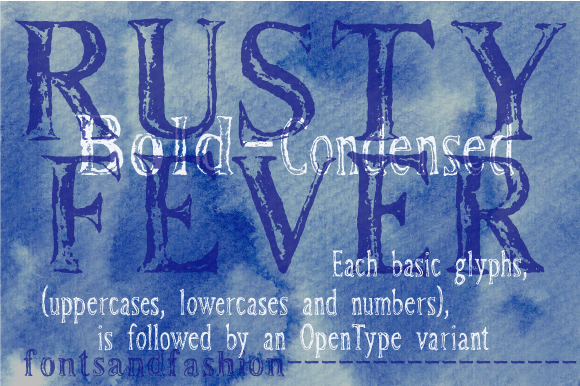
Rusty Fever: Understanding the Oxidized Appeal of This Distinctive Slab Serif
In the vast sea of typography available to designers, certain fonts stand out not just for their legibility but for their powerful character. Rusty Fever is one such typeface. It is a Slab Serif font that breaks away from the clean, digital perfection often sought in modern design. Instead, it embraces an organic, tactile aesthetic, evoking the suggestive atmosphere of deep oceans and the relentless process of water erosion. If you are evaluating font options for a project that requires a gritty, authentic, or vintage feel, understanding the nuances of Rusty Fever is essential for making an informed choice.
Defining the Aesthetic: More Than Just Distressed Text
When we talk about Rusty Fever, we are not merely describing a standard serif font with a filter applied to it. The core identity of this typeface lies in its corroded and rusted effect. This design choice confers an oxidized appeal that feels historical and weathered. The characters appear as though they have survived years of exposure to the elements—perhaps sitting on a shipwreck in the abyss or weathering a storm on a metal sign.
The distinctiveness of Rusty Fever comes from its emphasis on irregular shapes. Unlike geometric sans-serifs or traditional serifs that rely on mathematical precision, this font mimics the unpredictability of nature. The edges are jagged, and the texture varies from glyph to glyph. This creates a visual rhythm that is chaotic yet harmonious, making it an excellent choice for projects where "perfect" feels too sterile.
The Role of Slab Serifs in Modern Design
To fully appreciate Rusty Fever, it helps to understand the category it belongs to. Slab Serifs, also known as Egyptians or Mechanics, are characterized by thick, block-like serifs. They are generally sturdy, bold, and command attention. Historically, they have been used for posters, advertisements, and headlines where readability at a distance was paramount.
However, Rusty Fever takes the structural stability of a Slab Serif and subverts it with texture. While a standard Slab Serif might convey industrial strength or bureaucratic authority, Rusty Fever conveys age, mystery, and adventure. It sits at the intersection of industrial design and artistic expression. When comparing this to cleaner alternatives, you are essentially weighing the value of visual perfection against stylistic mood.
Comparing Rusty Fever to Cleaner Alternatives
If you are currently exploring your options, you will likely encounter a spectrum of choices. On one end, you have pristine, vector-perfect Slab Serifs like Rockwell or Courier. These are excellent for corporate documents, technical manuals, or body text where clarity is the priority.
On the other end, you have Rusty Fever. This font is not designed for long-form body text or legal contracts. Its "rusty" texture can reduce legibility at small sizes, making it a poor choice for fine print. However, for large-scale display text, logos, or branding materials, it offers a level of character that cleaner fonts simply cannot match. If your goal is to evoke a specific atmosphere—such as a dive bar, a nautical expedition, or a vintage garage—Rusty Fever is often the superior choice.
Technical Advantages: The Power of PUA Encoding
A critical factor in evaluating Rusty Fever is its technical construction. This font is PUA (Private Use Areas) encoded. For the non-technical reader, this is a significant benefit. It means that all of the glyphs, swashes, and special characters included with the font can be accessed easily, regardless of the design software you are using.
Many decorative fonts look great in the preview but are frustrating to use because special characters are hidden behind complex keyboard shortcuts or require specialized software. Rusty Fever removes this barrier. Whether you are using a professional suite like Adobe Illustrator or a simpler tool like Canva, you can access the full range of the font's decorative elements. This accessibility makes it a practical resource for designers who want to add flair without a steep technical learning curve.
Exploring the "Oxidized" Look: When Texture is Key
The "oxidized appeal" of Rusty Fever is its primary selling point, but it is also the main decision factor. You need to ask yourself: Does my project benefit from a distressed look?
In the current design landscape, there is a strong trend toward "authentic" and "lived-in" aesthetics. Polished, plastic-looking designs are often viewed with skepticism by consumers, particularly in the 20–50 age demographic who appreciate craftsmanship and history. Rusty Fever taps into this desire for authenticity. It suggests that a brand has a story, that it is grounded, and that it values the passage of time.
However, texture can be a double-edged sword. If you are designing for a brand that wants to appear futuristic, sleek, or hyper-clean (such as a fintech startup or a luxury spa), Rusty Fever would likely clash with the brand identity. In those cases, a geometric sans-serif or a high-contrast serif would be more appropriate.
Best-Fit Situations for Rusty Fever
Based on its characteristics, Rusty Fever is best suited for specific applications. Understanding these use cases can help you decide if it fits your current project.
- Poster and Title Design: The irregular shapes and heavy texture make it impossible to ignore. It is ideal for movie posters (especially horror, thriller, or adventure genres) and event flyers.
- Logo Design: For businesses related to mechanics, maritime industries, vintage clothing, or rugged outdoor activities, Rusty Fever provides instant brand recognition.
- Merchandise: T-shirts, hats, and stickers often benefit from fonts that look good when screen-printed. The "imperfect" nature of Rusty Fever hides minor printing inconsistencies better than a clean vector font.
- Album Art: Music genres like rock, blues, metal, or grunge often utilize oxidized typography to set the mood before the listener even hears a note.
Limitations and Tradeoffs
No font is perfect for every situation, and Rusty Fever is no exception. The primary tradeoff is versatility. A standard Helvetica or Times New Roman can be used for a wedding invitation, a bank statement, and a website footer. Rusty Fever is highly specialized.
Another consideration is scalability. While the font looks magnificent on a billboard or a computer screen, the erosion effect can cause "noise" if the text is printed very small. The jagged edges may merge together, turning text into an unreadable gray blob. Therefore, if you are working on a project that requires high-density information or small print, you should pair Rusty Fever with a cleaner companion font for the body copy.
Making the Decision: Is Rusty Fever Right for You?
Choosing a font is about alignment. You are aligning the tool with the message. If your message is about perfection, precision, and the future, look elsewhere. If your message is about history, texture, depth, and the beauty of decay, then Rusty Fever is a strong contender.
Consider the "water erosion aspect" mentioned in its description. This evokes a sense of movement and change. It is a font that feels alive, even as it depicts the process of aging. When you use Rusty Fever, you are not just displaying text; you are displaying a narrative of endurance.
Conclusion: Balancing Style and Function
In summary, Rusty Fever is a specialized tool for designers who want to evoke a specific, gritty atmosphere. Its PUA encoding ensures that it is technically accessible, while its unique aesthetic sets it apart from generic Slab Serifs.
When comparing it to other options, consider the context of your project. For corporate, academic, or highly technical content, the irregular shapes of Rusty Fever may be distracting. But for creative, artistic, or branding projects that aim to capture a sense of depth and history, few fonts offer the same immediate impact. By weighing the strengths of its oxidized appeal against the need for clarity, you can make a confident decision about whether this font belongs in your toolkit.