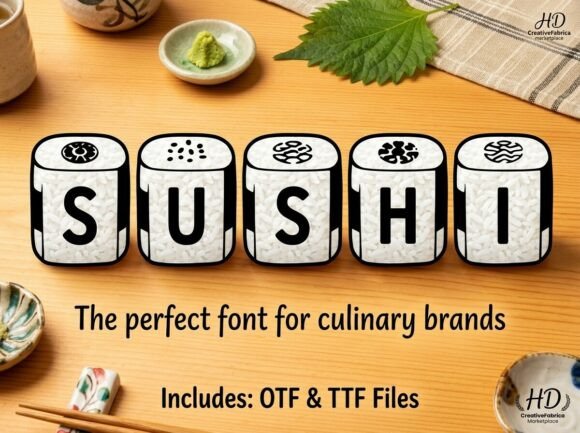
Sushi: A Playful Font for Culinary Brands
In the bustling world of food branding, visual identity is your first handshake with a customer. It has to be memorable, appetizing, and perfectly aligned with your culinary concept. For businesses in the Japanese cuisine space or those looking for a uniquely textured aesthetic, finding a typeface that captures both professionalism and playful charm can be a challenge. Enter Sushi, a display font that doesn't just spell out words but serves them up with an irresistible visual flavor. This isn't your standard sans-serif; it's a creative tool designed to make your headlines as memorable as a signature dish.
What Exactly Is the Sushi Typeface?
At its core, Sushi is a display typeface characterized by its bold, clean sans-serif letterforms. What sets it apart is the extraordinary detail: each glyph is artfully crafted to resemble a piece of sushi, nestled inside a charming, 3D container. The design features realistic rice textures and artisanal seaweed wrappers that provide a tangible, tactile quality. Topping off each character are distinctive illustrative fillings—think vibrant salmon, tuna, avocado, or shrimp—giving the text a rhythmic and appetizing character. This fusion of typographic clarity and illustrative whimsy is what defines the Sushi font, making it a standout choice for projects that demand high-impact visual style without sacrificing legibility.
Key Characteristics and Strengths
Understanding the anatomy of Sushi helps appreciate its utility. Its strengths lie in the balance between artistic expression and functional design.
- Bold Sans-Serif Foundation: Beneath the decorative elements, the letter structure is that of a robust, modern sans-serif. This ensures that despite its novelty, the text remains readable at larger scales, which is essential for display use.
- Hyper-Realistic Textures: The attention to the rice grain texture and the sheen on the seaweed wrapper adds a layer of depth and realism. This isn't a flat, cartoonish font; it has a sense of dimension and craft that communicates quality and artisanal care.
- Conceptual Cohesion: Every element works together to tell a story. The container isn't just a random shape; it's a nigiri or gunkan boat, reinforcing the culinary theme immediately and unmistakably.
- Professional Whimsy: The design walks a fine line between fun and professional. It avoids looking childish, instead radiating a confident, playful sophistication suitable for commercial branding.
Practical Applications: Where Sushi Shines
The true test of a specialty font is its practical application. Sushi is engineered for specific, high-impact scenarios where thematic consistency is paramount.
Restaurant Branding and Identity
For a Japanese restaurant, sushi bar, or izakaya, the Sushi font is a natural fit for the logo or primary wordmark. It immediately communicates the establishment's specialty without a single word of description. It works exceptionally well for signage, menu headers, and packaging for takeout containers. The 3D quality of the letterforms translates effectively to physical materials, especially when printed with techniques that can enhance texture.
Food Truck and Pop-Up Graphics
In the fast-paced environment of a food truck or culinary pop-up, you have seconds to attract attention. Sushi's bold, colorful, and thematic nature is perfect for vehicle wraps, menu boards, and social media banners. Its playful energy matches the dynamic, often trendy vibe of street food culture, helping a brand stand out in a crowded festival or market.
Digital Content and Social Media
For food bloggers, recipe developers, and culinary influencers, the Sushi font injects personality into YouTube thumbnails, Instagram story headers, and Pinterest graphics. It’s particularly effective for creating a cohesive visual brand for a channel or blog dedicated to Japanese cooking, bento box tutorials, or food reviews. Using it for headline text on a website's hero section can create a strong first impression that engages visitors immediately.
Educational and Creative Projects
Educators teaching about Japanese culture or food science could use Sushi in presentation slides, posters, or educational materials to create an engaging, thematic learning experience. Similarly, hobbyists and crafters might find it perfect for designing custom party invitations for a sushi-making night, scrapbooking elements, or personalized gifts for fellow food enthusiasts.
Benefits for Your Brand and Workflow
Integrating a font like Sushi into your design toolkit offers tangible benefits that go beyond mere aesthetics.
- Instant Brand Recognition: A unique typeface becomes a core part of your visual identity. Using Sushi consistently helps build a recognizable brand image that customers can identify at a glance, fostering loyalty and recall.
- Time Efficiency: Instead of commissioning custom illustrations for every headline, Sushi provides a ready-made, cohesive visual language. This can significantly speed up the design process for social media content, marketing materials, and merchandise.
- Emotional Connection: The font's playful and artisanal quality can evoke positive emotions—joy, curiosity, and appetite. This emotional resonance can make marketing messages more effective and create a more enjoyable user experience on your website or app.
- Thematic Consistency: For a project with a very specific theme, like a Japanese cooking app or a culinary tourism website, Sushi ensures that every textual element reinforces the core concept, creating a more immersive and professional environment.
Important Considerations for Implementation
While Sushi is a powerful tool, using it effectively requires some thought. Its detailed, illustrative nature means it is best suited for display purposes—think headlines, logos, and short, impactful text. Avoid using it for body copy or long paragraphs, as the intricate details can reduce readability at small sizes and cause visual fatigue.
When pairing Sushi with other fonts, choose a simple, clean sans-serif or a neutral serif for supporting text. This contrast allows the display font to shine without overwhelming the design. Always test the font in context; see how it looks on both screen and in print, and ensure the color palette of your design complements the illustrative fillings within the letters. Finally, consider your audience. While it appeals broadly, ensure its playful style aligns with the specific tone you wish to set for your brand or project.
In summary, the Sushi font is more than just a novelty; it's a strategic design asset for anyone in the culinary creative space. It offers a rare blend of whimsy and professionalism, enabling chefs, restaurateurs, content creators, and marketers to serve up a taste of creative playfulness that is both visually stunning and functionally effective. By understanding its strengths and applying it thoughtfully, you can ensure your visual communication is as polished and appealing as the dishes you celebrate.