Aesthetic Rigelsia: Mastering the Art Deco Revival Without the Common Pitfalls
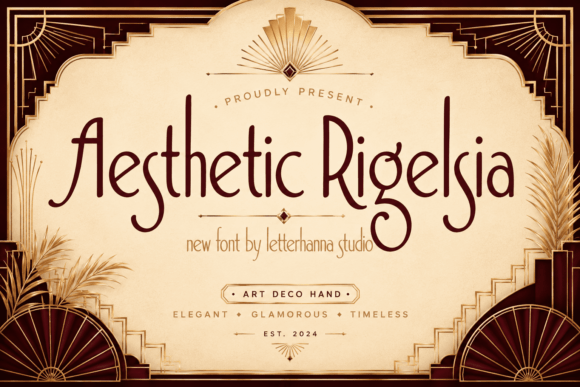
The 1920s possessed a visual language that modern design often attempts to emulate but rarely captures with genuine authenticity. It was an era defined by bold geometry, vertical ambition, and an unapologetic sense of luxury. Today, that aesthetic is back, not just as a nostalgic trend, but as a powerful branding tool. However, bridging the gap between a modern project and a vintage masterpiece requires more than just a typeface; it requires an understanding of how typography shapes perception. This is where Aesthetic Rigelsia enters the conversation—a handcrafted font designed to translate the golden age of Art Deco into contemporary work. While it offers a striking solution for designers, brand builders, and creatives, utilizing it effectively requires avoiding a few common missteps that can turn "glamorous" into "gimmicky."
Understanding the Power of Geometric Precision
Before diving into application, it is essential to understand what makes Aesthetic Rigelsia distinct. This is not a standard serif or a simple sans-serif; it is a display font characterized by ultra-tall verticals and sweeping geometric curves. Its design philosophy is rooted in confidence. When used correctly, it signals quality before a single word is read. It commands attention in a way that few modern minimalist fonts can.
However, a common misunderstanding among beginners is treating decorative typefaces like standard body copy. Aesthetic Rigelsia was built to be a statement piece. It is the typography equivalent of a velvet tuxedo—you don't wear it to mow the lawn, and you don't use it for the fine print on a legal contract. It is designed for headlines, logos, and display text where the goal is to evoke an immediate emotional response. Recognizing this distinction is the first step toward using the font effectively.
The Mistake of Overcrowding
One of the most frequent errors in using high-impact display fonts is failing to respect "white space." Because Aesthetic Rigelsia features intricate geometric detailing and tall verticals, it requires breathing room. A novice designer might place the text too close to other graphic elements or set the line height (leading) too tight.
When the letters are cramped, the elegance of the Art Deco style collapses into visual noise. The "sweeping curves" lose their definition, and the text becomes difficult to read. The better approach is to let the font breathe. If you are using it on a wedding invitation, allow generous margins. If it is a logo, ensure the surrounding negative space is substantial. This isolation creates a focal point that feels intentional and luxurious, rather than cluttered.
Context is King: Avoiding Mismatched Applications
There is a reason Aesthetic Rigelsia looks incredible on a product label or a high-end brand logo: context. The font speaks the language of premium value. A significant mistake is applying this aesthetic to a brand voice that is casual, rustic, or utilitarian. For example, using this font for a camping gear company or a fast-food chain might send mixed signals. It creates a cognitive dissonance where the "Parisian shelf" vibe clashes with the product's actual nature.
Before committing to Aesthetic Rigelsia, evaluate your project's personality. Does your brand aim to feel exclusive, sophisticated, or historic? If yes, this font is a match. If your brand is playful, rugged, or hyper-modern in a minimalist tech sense, you may need to look elsewhere. The goal is alignment. When the typography matches the message, the design feels authentic. When they fight each other, the result feels like a costume rather than a uniform.
Pairing Pitfalls
Another area where projects often falter is in font pairing. Aesthetic Rigelsia is a "loud" font. It has a strong personality. Pairing it with another decorative or overly stylized font is a recipe for visual chaos. Imagine two people shouting at the same time—neither is heard clearly.
The solution lies in contrast and hierarchy. You need a quiet partner for your loud protagonist. A clean, geometric sans-serif or a simple, classic serif works best for body text. This allows Aesthetic Rigelsia to dominate the headlines while the secondary font handles the legible work of paragraphs and descriptions. This hierarchy guides the reader's eye naturally, ensuring the "bold, geometric" nature of the headline enhances the reading experience rather than hindering it.
Evaluating Usability and Technical Details
For the entrepreneur or freelancer downloading a new typeface, technical evaluation is often overlooked in favor of aesthetics. It is easy to fall in love with the preview image, but the real test happens in the software.
- File Formats: Ensure the package includes web-safe formats (WOFF/WOFF2) if you plan to use it for a blog or website, alongside desktop formats (OTF/TTF) for print.
- Licensing: This is a critical, often ignored detail. Check if the license covers commercial use if you are building a client brand or selling merchandise. Many beautiful fonts are free for personal use only.
- Character Set: Does the font support multiple languages or special symbols if your audience is international?
Aesthetic Rigelsia is crafted with care, but always verify that the technical specs match your deployment needs. A font that looks great in Photoshop but renders poorly on a mobile browser due to file size or format issues can hurt your site's performance and SEO.
Practical Advice for Maximum Impact
To truly harness the "golden age" feeling without looking dated, consider these practical tips for implementation:
- Color and Texture: Art Deco pairs beautifully with metallics (gold, silver, bronze) and deep, rich colors (navy, emerald, black). However, be careful with bright, neon colors, which can clash with the vintage geometric style.
- Scale: Go big or go home. Aesthetic Rigelsia is designed to be seen. Using it at 12pt on a poster is a mistake. Scale it up to make the geometric details visible and impactful.
- Letter Spacing (Tracking): Depending on the look you want, slightly increasing the tracking can add a modern, airy feel to the vintage shapes, making it more legible for contemporary audiences.
Ultimately, Aesthetic Rigelsia