Make a Winning Move with Cream: A Bold Display Typeface
Capturing the Mod-and-Meticulous Soul
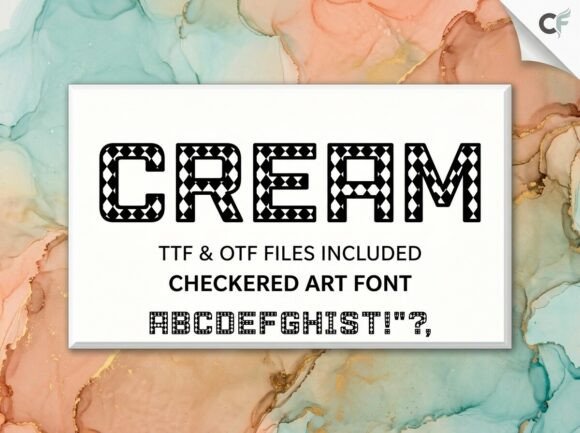
In the crowded landscape of digital typography, finding a typeface that truly stops the scroll is rare. Enter Cream, a high-contrast display typeface that doesn’t just sit on the page—it commands attention. At its core, Cream is a bold, blocky sans-serif, but its secret lies in the details. Each letterform is filled with a dense, rhythmic harlequin pattern of black and white diamonds. This isn't just a font; it is a visual statement that captures a "mod-and-meticulous" soul, blending the rebellious energy of the 1960s with modern geometric precision.
If you are a designer, entrepreneur, or creator looking for a typeface that screams confidence without saying a word, Cream offers a unique solution. It bridges the gap between retro nostalgia and avant-garde futurism. The heavy structural weight ensures visibility, while the optical personality creates an immediate sense of intrigue. It is the typographic equivalent of a winning chess move—calculated, striking, and impossible to ignore.
The Anatomy of a Bold Statement
Understanding what makes Cream effective requires a closer look at its design. Unlike standard sans-serif fonts like Helvetica or Arial, which prioritize neutrality, Cream prioritizes personality. The "bold" and "blocky" nature of the letters ensures that the text remains readable even when used as a headline or logo mark. However, the defining feature is the internal texture.
The harlequin pattern—often associated with clowns, playing cards, and mod fashion—has been repurposed here to create a sense of rhythm and movement. The black and white diamonds create a high-contrast visual vibration. This optical effect means that Cream is best used at larger sizes. When scaled down too small, the intricate diamond pattern may lose its definition. Therefore, think of Cream as a display typeface, meant for titles, headers, and logos, rather than body copy.
Why the Checkerboard Pattern Works
The checkered motif is universally recognized. It signals speed, competition, and finish lines. By incorporating this pattern into the letterforms, Cream taps into that psychological trigger. It feels energetic and fast-paced. For brands that want to convey momentum—whether in business, sports, or fashion—this font does the heavy lifting visually.
Practical Applications: Where to Use Cream
The versatility of Cream lies in its ability to adapt to specific niches that crave high energy and distinct aesthetics. If you fall into any of the following categories, this typeface could be a game-changer for your visual identity.
Independent Racing and Motorsport Branding
This is perhaps the most natural fit for Cream. Independent racing teams, motorsport blogs, or sim-racing streamers often struggle to find assets that look professional yet gritty. Cream provides that "factory team" look instantly. The heavy weight mimics the sturdy decals seen on race cars, while the diamond pattern evokes the checkered flag. It is perfect for team logos, race day posters, and merchandise.
Retro Diner and Hospitality Identities
There is a timeless charm to the mid-century modern aesthetic. Cream fits perfectly into a retro diner identity, a vintage burger joint, or a specialty coffee shop aiming for a 1950s/60s vibe. The "mod" influence in the font’s DNA pairs wonderfully with neon signage concepts, paper menus, and branded uniforms. It feels nostalgic without looking outdated.
Avant-Garde Fashion and Editorial Layouts
Fashion thrives on the avant-garde. If you are designing a magazine spread for a streetwear brand or creating a lookbook for a bold clothing line, Cream offers the necessary edge. Its geometric rigidity contrasts well with organic photography. Use it for pull quotes or chapter titles in editorial layouts to break up the monotony of standard serif text. It suggests that the brand is daring, confident, and unafraid to break the mold.
High-Impact Social Media Headers
In the fast-paced world of social media, you have milliseconds to capture a user's attention. Cream is designed for exactly this purpose. The high contrast and intricate pattern make it stand out against the busy feeds of Instagram, Twitter, or LinkedIn. It is particularly effective for podcast covers, YouTube thumbnails, and sale announcements where visual hierarchy is critical.
Strategic Benefits for Creators and Business Owners
Choosing a typeface is a business decision, not just an artistic one. Here is how adopting Cream can support your specific goals.
- Instant Brand Recognition: Because Cream is so visually distinct, it helps brands become memorable. You won't blend in with the thousands of businesses using generic Google Fonts.
- Conveying Energy: If your brand voice is energetic, competitive, or fast-paced, Cream translates that abstract feeling into a visual reality.
- Versatility in Media: Despite its complex pattern, Cream works well in digital formats and high-quality print. It scales well for large format printing, such as event banners or storefront window decals.
Important Considerations Before You Start
While Cream is a powerful tool, it is not a "set it and forget it" solution for every project. To use it effectively, you need to understand its limitations and strengths.
Readability vs. Legibility
As a display font, Cream excels at legibility—you can tell what letter it is. However, readability—the ease of reading a sentence—can suffer if you use it for long paragraphs. The dense diamond pattern can cause eye strain in small blocks of text. Always use Cream for headlines, logos, and short bursts of text. Pair it with a clean, simple sans-serif or serif font for the body copy to maintain a balanced hierarchy.
File Formats and Licensing
Ensure you check the licensing terms for Cream. If you are using it for commercial purposes—such as selling merchandise with the font or using it in a paid client project—you need to verify that the license covers that usage. Additionally, using vector formats (like .SVG or .OTF) will ensure that the intricate diamond pattern remains crisp and doesn't pixelate when resized.
Color Theory and Backgrounds
Because Cream has a built-in black-and-white pattern, it interacts with color in unique ways. Placing Cream on a solid, neutral background (like charcoal, navy, or white) usually yields the best results. Placing it on a busy photographic background can make the text look muddy. Use solid color blocks behind the text to let the harlequin pattern shine.
Making the Move
Adopting a typeface like Cream is about making a deliberate choice to stand out. It is for the entrepreneur who wants their racing team to look like champions before the race starts. It is for the fashion editor who wants to disrupt the status quo. It is for the small business owner who wants to capture the fun, energetic spirit of a retro diner.
By balancing its heavy structural weight with its intricate rhythmic pattern, Cream offers a unique tool in your design arsenal. It requires a thoughtful approach—respecting its power as a display font and pairing it wisely—but the payoff is a brand identity that is unmistakably winning.