Make a Splash with Gulls: Integrating a Retro-Modern Typeface into Your Workflow
Understanding the Anatomy of the Gulls Typeface
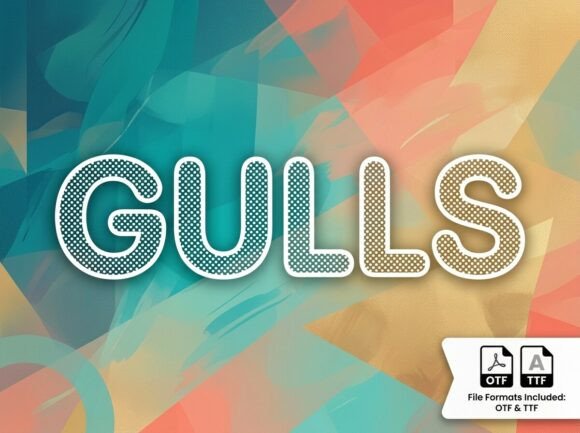
In the landscape of contemporary typography, finding a typeface that bridges the gap between nostalgic charm and modern utility can be challenging. Gulls is a high-energy display typeface designed specifically to solve this problem. It captures a retro-and-radiant soul, characterized by bold, rounded sans-serif letterforms. The defining feature of this font is its rhythmic halftone dot pattern, which radiates a classic pop-art aesthetic. Unlike standard sans-serifs that rely on flat fills, Gulls utilizes structural weight and texture to create depth, making it a premier choice for designs that require high impact.
The visual language of Gulls is rooted in the 1960s surf culture and the comic book boom, yet it remains surprisingly versatile. The chunky structural weight ensures legibility at large scales, which is critical for display typography. When you select a font like Gulls, you are not just choosing letters; you are selecting a pre-packaged mood. The "vibrant personality" inherent in the design dictates that this is not a font for body text or legal disclaimers. Instead, it functions as a visual anchor, intended to draw the eye and establish a tone of playfulness and energy immediately.
Strategic Placement in the Design Process
Integrating a distinct typeface like Gulls requires foresight in your design workflow. Because of its strong visual identity, it functions best when introduced during the conceptualization phase rather than the final formatting stage. If you wait until the end of a project to apply a display font, you risk clashing with the existing layout structure. Instead, consider Gulls as a foundational element that influences the surrounding design choices.
For example, if you are planning a summer festival poster, the halftone texture of Gulls dictates the texture of the rest of the composition. You might pair it with grainy filters on your photography or high-contrast background colors to support the pop-art aesthetic. In a broader workflow, this means your asset gathering phase needs to be aligned with the font's character. You should be sourcing images, textures, and color palettes that complement the "retro-and-radiant" nature of the typeface before you begin layout assembly.
Compatibility with Backgrounds and Imagery
One of the most practical implementation tips for using Gulls involves background management. Because the font features a halftone dot pattern, placing it over a busy, high-detail photograph can often result in visual noise, rendering the text difficult to read. To maximize the effectiveness of this typeface, prioritize solid colors, simple gradients, or images with shallow depth of field (blurred backgrounds).
The interaction between the font's texture and the background creates the "splash." If you are working on a web header, ensure there is sufficient padding around the text. The rounded letterforms need room to breathe; crowding them against navigation bars or other graphic elements will dilute the font's playful impact. Treat the text not just as information, but as a graphic object that requires its own defined space within the composition.
Practical Applications: From Screen to Print
The versatility of Gulls allows it to fit into various specific workflows, particularly in branding and marketing materials. Its design is optimized for scenarios where you need to capture attention quickly.
- Independent Comic Book Branding: The bold weight and halftone texture make Gulls ideal for cover titles and chapter headings. It mimics the Ben-Day dots used in vintage printing, providing an authentic period look without requiring complex image processing.
- Retro Surf Shop Logos: The rounded sans-serif structure conveys a sense of friendliness and approachability. For a logo, you can utilize the font as a base and then convert the text to outlines to customize the ligatures or extend the swashes for a more bespoke mark.
- Social Media Headers: On platforms like Instagram or Twitter, where users scroll quickly, the "high-impact" nature of Gulls stops the thumb. It is particularly effective for announcements, sale graphics, and event promotions where the tone is celebratory.
Integration with Digital Tools and Platforms
When implementing Gulls into your digital ecosystem, compatibility and performance are key considerations. As a display font, the file size may be larger than standard web fonts due to the complexity of the glyph patterns. If you are using Gulls for a website header, it is advisable to use modern font formats like WOFF2 to ensure faster load times without sacrificing the crispness of the halftone dots.
In terms of software interaction, Gulls works seamlessly within standard design environments like Adobe Illustrator, Photoshop, and Figma. However, because of the "rhythmic halftone" detail, scaling the vector can sometimes create optical illusions depending on the zoom level. When working in vector software, always view your design at 100% scale to accurately judge how the dot pattern will render in the final output. If you are using the font for print, ensure your DPI is set to at least 300; lower resolutions may cause the halftone dots to blur, transforming the intended texture into a muddy appearance.
Pairing with Neutral Complements
A common pitfall when using a font with a strong "retro soul" is pairing it with another decorative typeface. This creates a visual conflict. The most effective workflow strategy for Gulls is to pair it with a neutral, legible sans-serif or serif for body text. Fonts like Open Sans, Lato, or Merriweather provide a quiet background that allows the headlines set in Gulls to command attention. This contrast ensures that your hierarchy is clear: Gulls handles the emotion and the "hook," while your secondary font handles the data and the details.
Long-Term Use and Brand Consistency
For small business owners and freelancers, consistency is a currency of trust. Once you decide to incorporate Gulls into your brand assets, document its usage in your style guide. Define exactly where it should be used—such as "Headlines and Call-to-Action buttons only"—and where it should be avoided.
Because the font has a distinct personality, overuse can lead to brand fatigue. If every email, social post, and flyer uses Gulls, the "special" quality of the typeface diminishes. Reserve it for moments where you want to make a splash. For instance, use it for your annual summer sale, your podcast cover art, or your main logo lockup, but switch to a standard workhorse font for your weekly newsletter. This selective implementation maintains the font's impact and ensures that your audience associates the visual style of Gulls with your most exciting and high-value communications.
Ultimately, Gulls